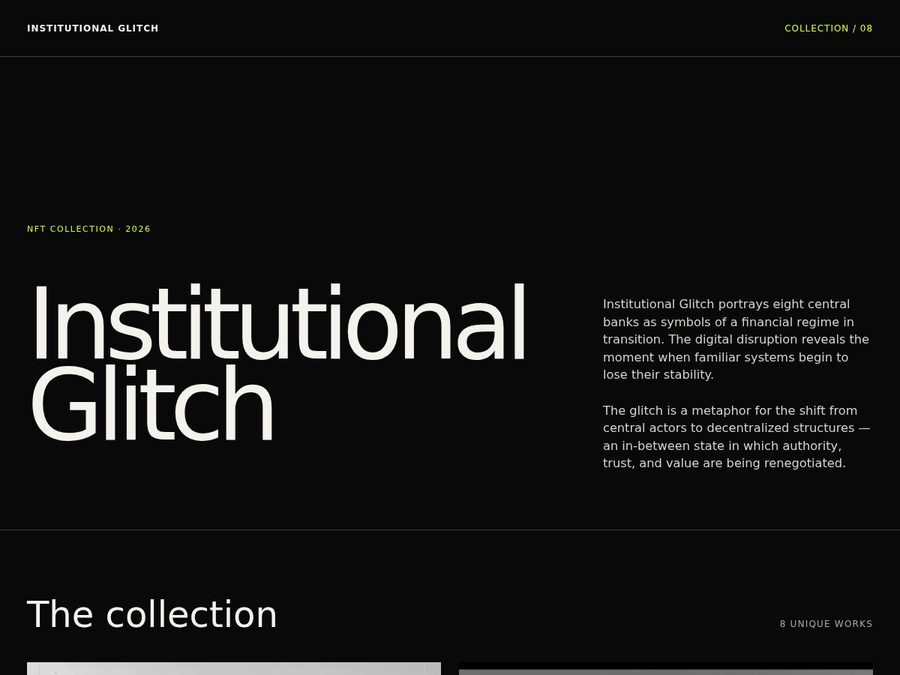
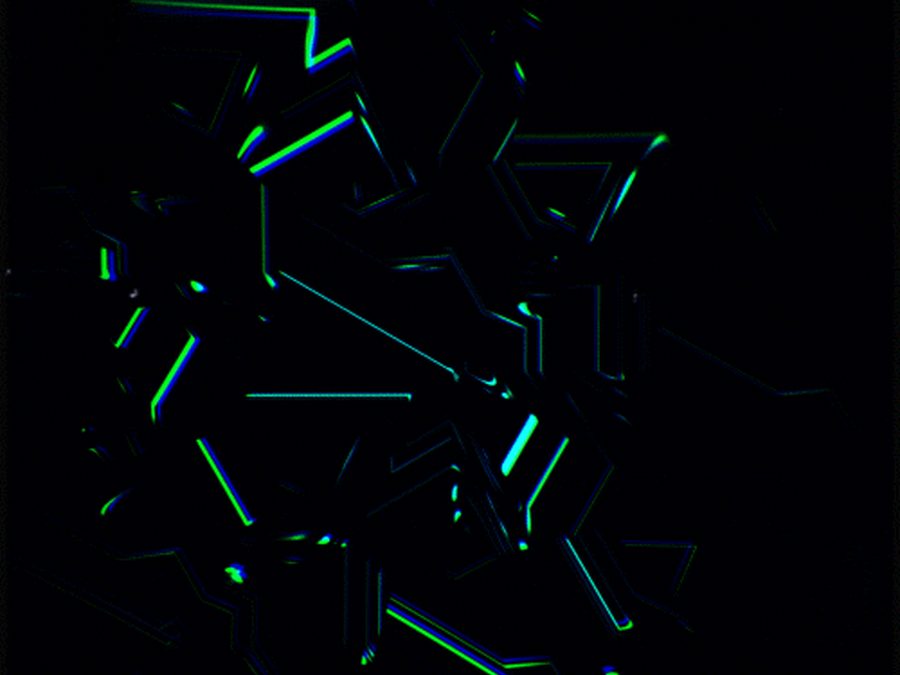
an ongoing collection
A private museum of finished, net-native and generative works — many of them minted, or on their way to being minted, as NFTs on Tezos (fxhash · objkt). Here they are gathered, grouped, and read.
the collection
xyz is the room where Kuhlmann's finished digital works come to rest — pieces made to live in the browser, that run as code and circulate as tokens. It is at once a studio archive and a small museum assembled by the artist himself: the works that are done, held together in one place and, increasingly, entered into the economy of the blockchain.
What follows is a curatorial reading. I have grouped the works into five themes and written to them as an art historian, a media scholar, and a collector of digital art would — as interpretation and association, drawn from the works' titles and from the logic of Kuhlmann's practice, not as a description of what each screen literally shows. Across all of them run the same preoccupations: the network as a system that observes itself, the market as the native medium of digital art, metamodern belief held in one hand and irony in the other, and the luminous screen as the ground of it all.
enter the live works · xyz the theory · the cybernetic society
i · the market · the click
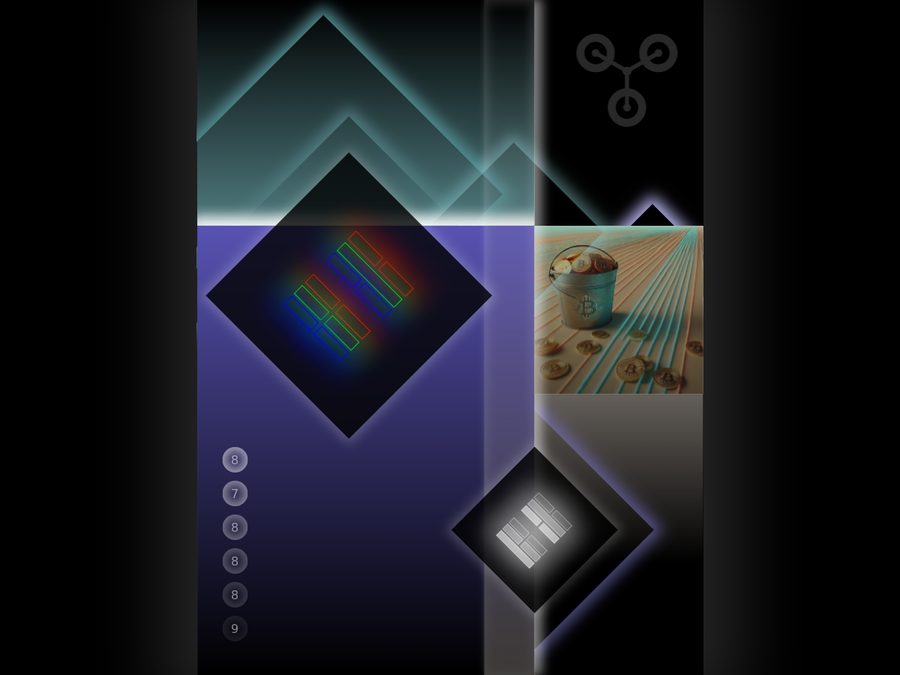
These works take the native economy of the network as their material: the click as the smallest unit of value, attention as currency, and the endlessly repeated promise that wealth — and salvation — are one tap away. One recognises here the self-aware irony of an artist working inside the very NFT and attention markets he anatomises: fiat and crypto, the "creative class" delivered as installable software, obedience to the interface reframed as desire. The line runs from the Situationist critique of the spectacle to today's platform capitalism; the tone is metamodern — complicit and critical in the same gesture.

stills — full-resolution files
Creativity as installable software; the artist-subject as an executable.
Obedience to the interface named as desire rather than coercion.
ii · the feed · the polis
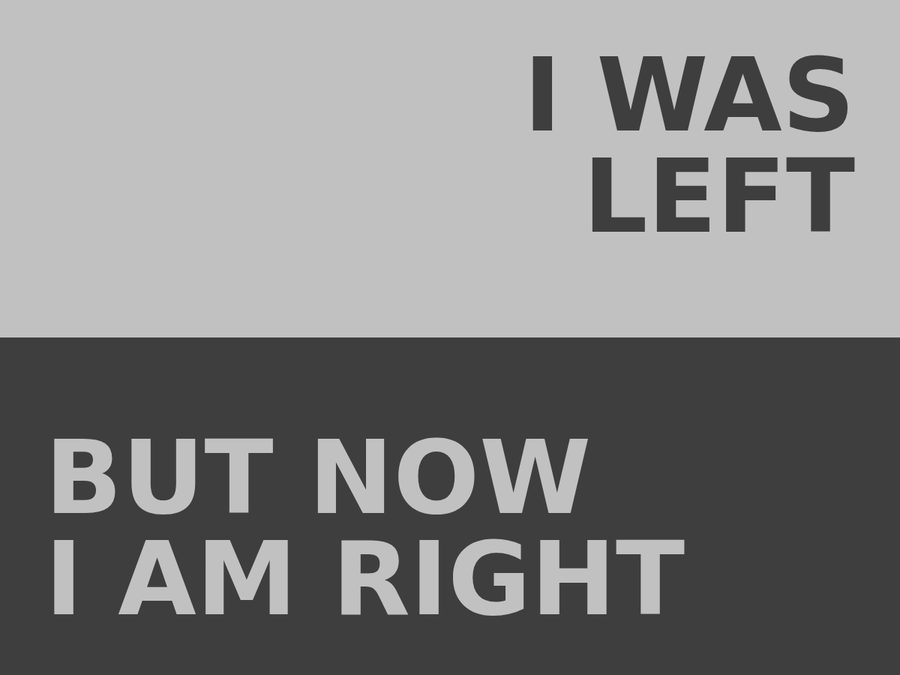
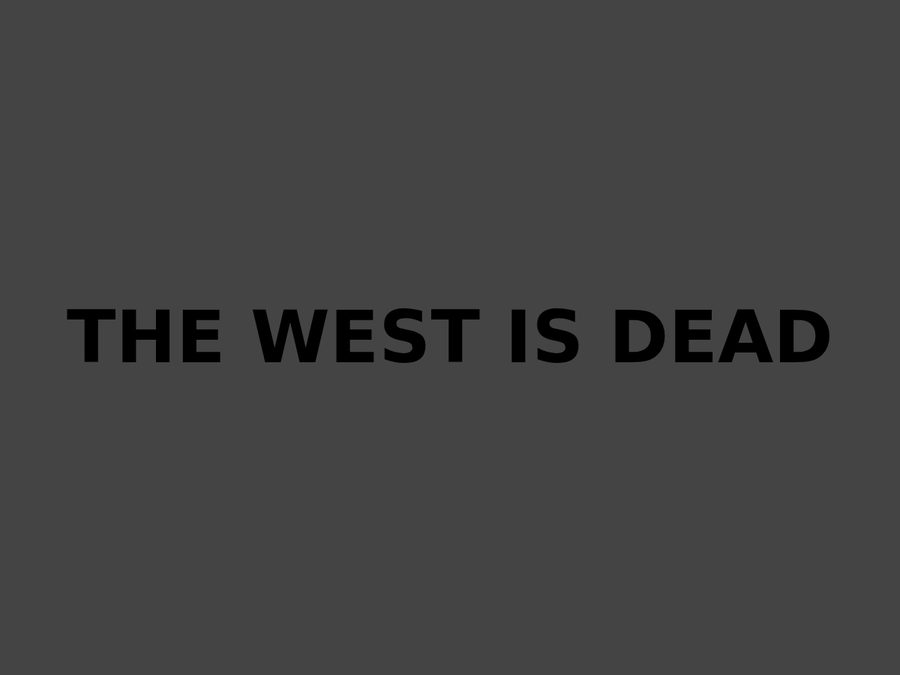
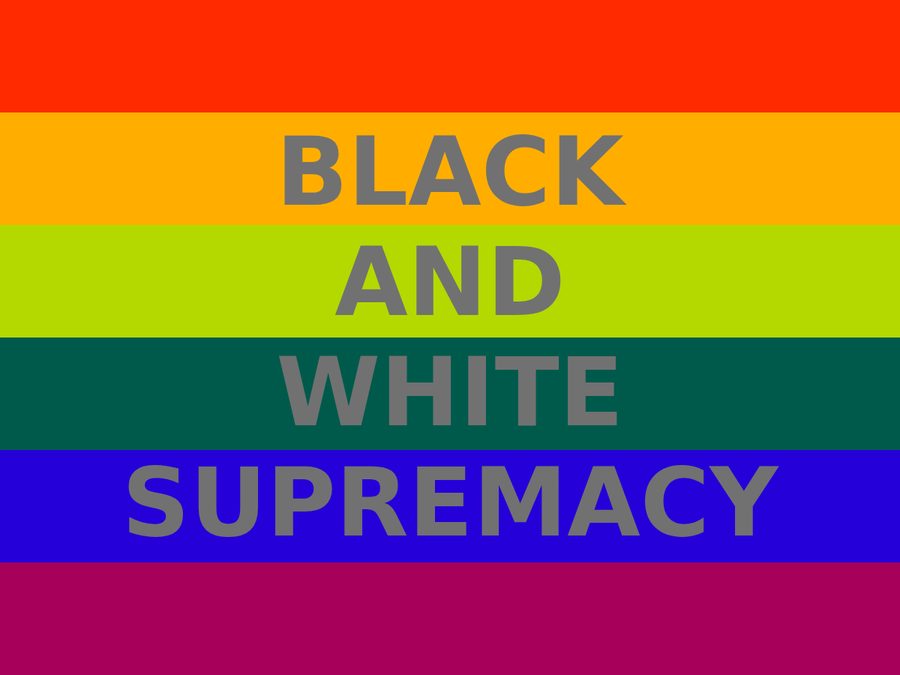
Here the network appears not as a tool but as a political order in its own right — a populist, tech-based system that manufactures consent, sorts the world into left and right, and recycles the death and rebirth of "the West" as content. Read art-historically, these pieces belong to the post-internet reckoning with the platform as ideology (one thinks of Hito Steyerl or Metahaven); read as a scholar, they stage what Luhmann would call the political system's self-description migrating into the feed. They refuse the retweet even as they live by it.
iii · bots · agents · systems
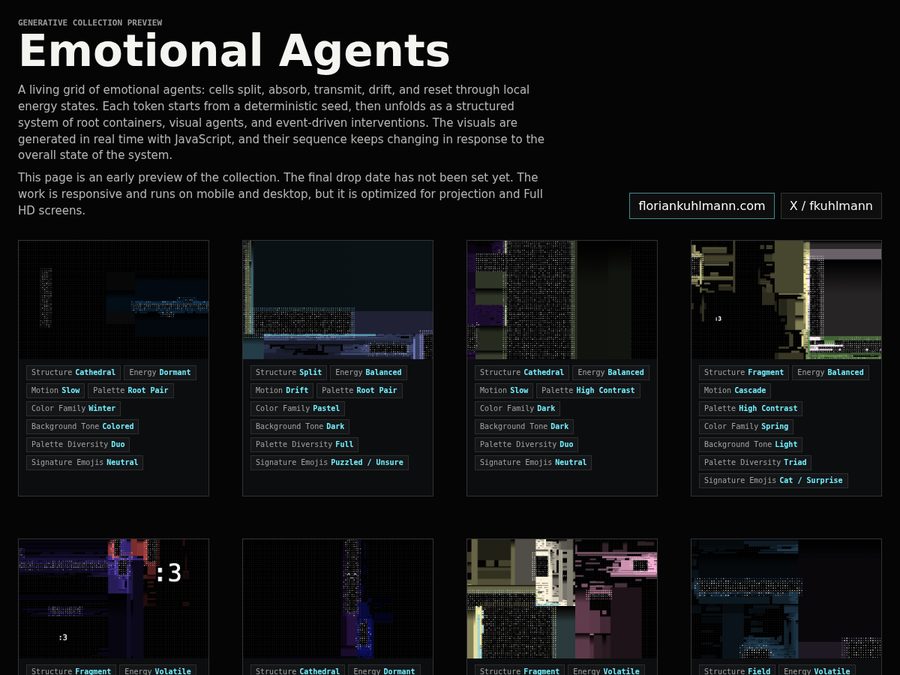
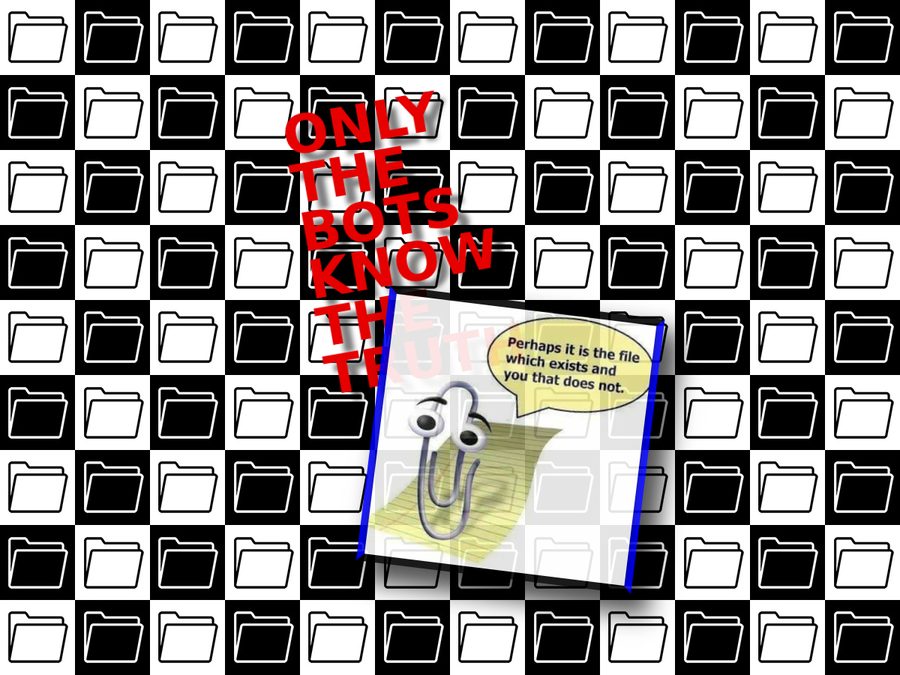
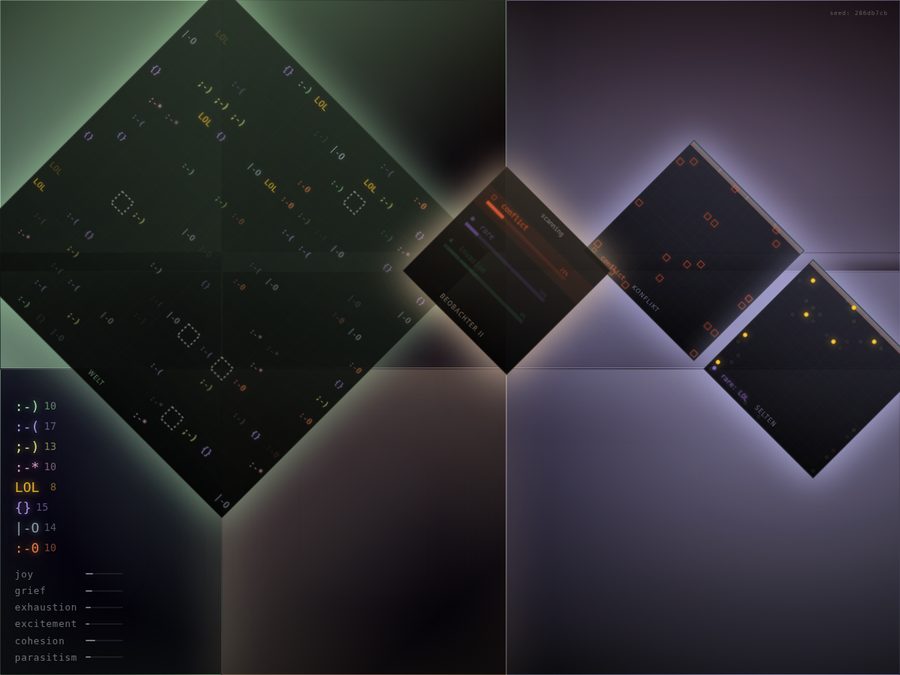
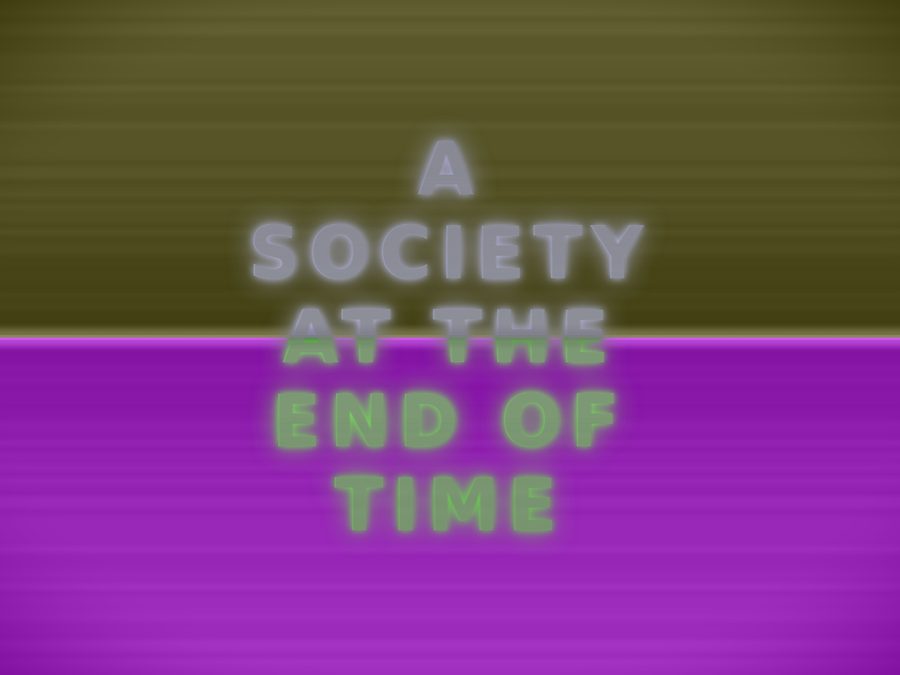
This is the most explicitly cybernetic group. Second-order observation — the observation of observers, after Heinz von Foerster and Niklas Luhmann — is the collection's method made visible: emotional agents, bots that are the only audience left, binary loops without end, a society imagined at the end of time. As a scholar one reads a sustained meditation on autopoietic systems that no longer need human beings to close their loops; as a collector, a body of work that lets code itself become the observing subject.
iv · trigram · myth · the real
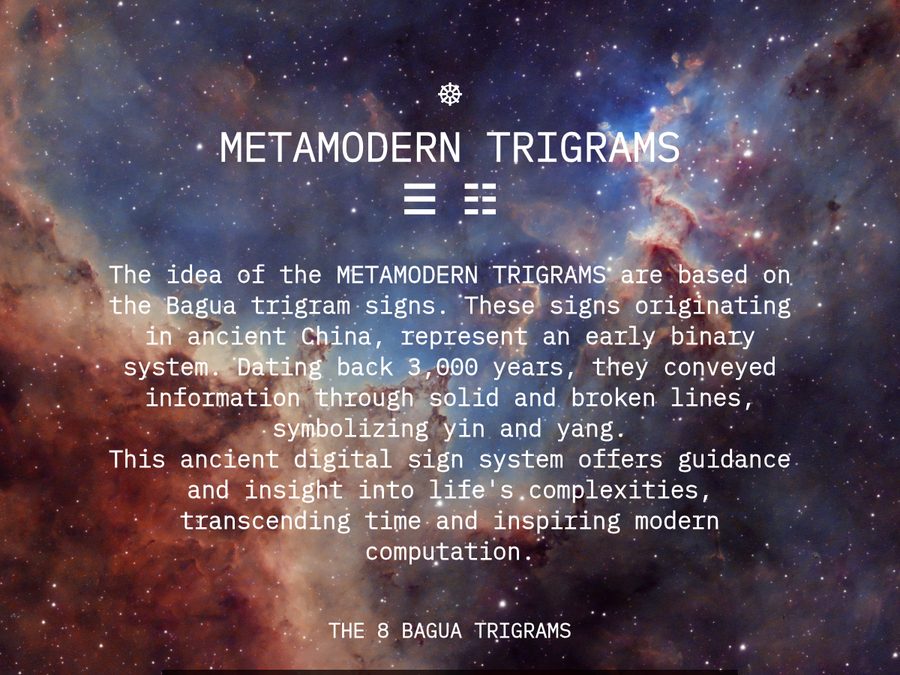
Against the cool of the system stands a warm, searching metaphysics — the metamodern oscillation between irony and sincere belief. The I Ching returns (the trigrams; holding together — difficult at the beginning names the Book of Changes' hexagrams of union and of the hard start), alongside a net-borne universal consciousness, a surrealist Jesus, and the flat verdict that reality was overrated. Art-historically this is the spiritual dimension of net art that is rarely admitted; read as a scholar, a post-secular treatment of the network as a site of belief. These are the works that risk the most.
stills — full-resolution files
Belief read through the avant-garde; the sacred as montage.
The net proposed, half-seriously, as a candidate for a shared mind.
An unfinished negation; the sentence the image is left to complete.
A quiet image of divergence; the fork in the path as fate.
v · rgb · save · signal
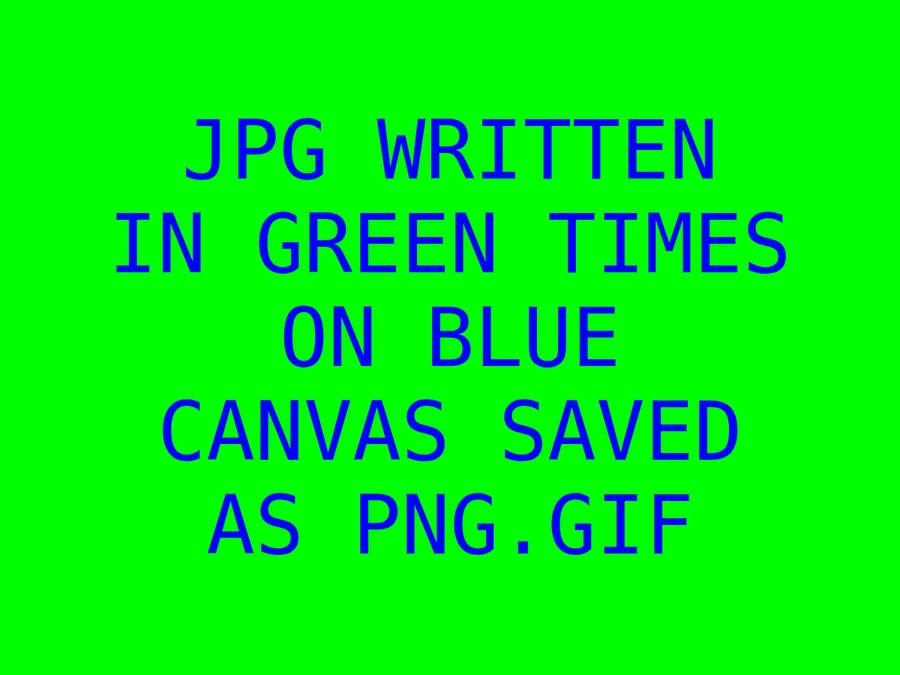
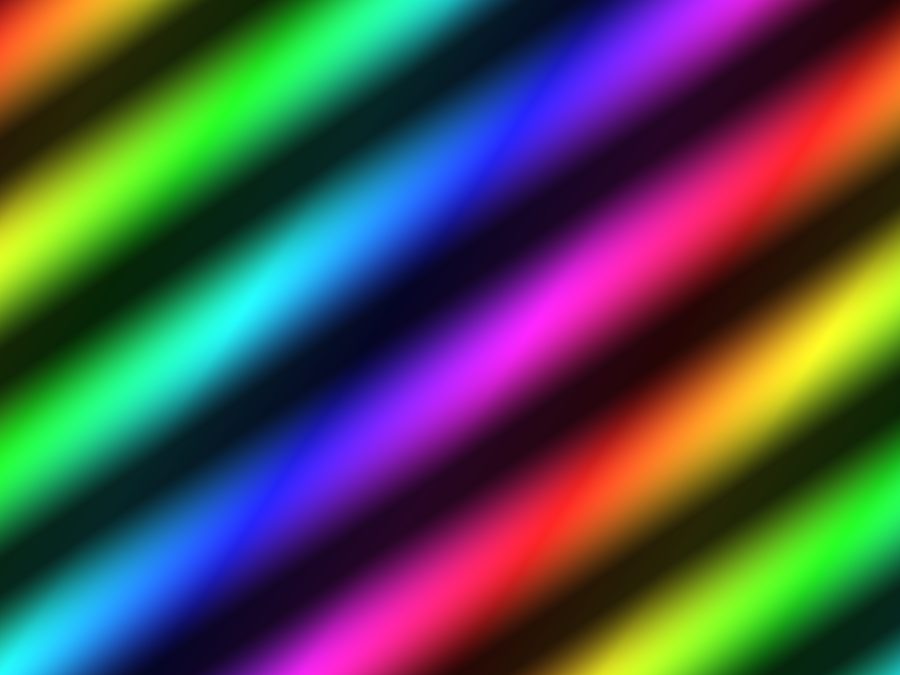
Finally, the works that take the screen itself as medium and subject: RGB as the elementary pigment of the display, the save command raised to a gesture, the psychedelic overdrive of pure signal, the claim that everything is true once everything is renderable. This is the formalist, net-native core — colour-field painting rewritten for the luminous display, in the tradition that runs from concrete art through the demoscene to generative code. For a collector of digital art, these are the pieces where the medium is most nakedly honest about being pixels.